Cyber, Art, Leadership
I got into cybersecurity because I was intrigued by the unknown. Granted, I was in high school and the mystery was captivating, but not yet very thoughtful.
Then, after being drafted into the military and doing cybersecurity as a profession, I came to understand some basic truths about the world. In cybersecurity, there are primitives, basic constructs almost like physics, that always apply. Once you see the world in plain, bare-bones terms, you understand that innovation and change are still very much "inside the box." I have always argued that the big transformations that occurred during my career, virtualization, the cloud, and now AI, are innovative but still within the same principles and constructs of cybersecurity. So adapting to them can be relatively easy.
For me, art is somewhat similar. While this is not true of all types of art, and in some cases art is simply a way to show good craftsmanship, I think good artists try to provoke thought. They think through the same questions about the box and the constructs of different domains.
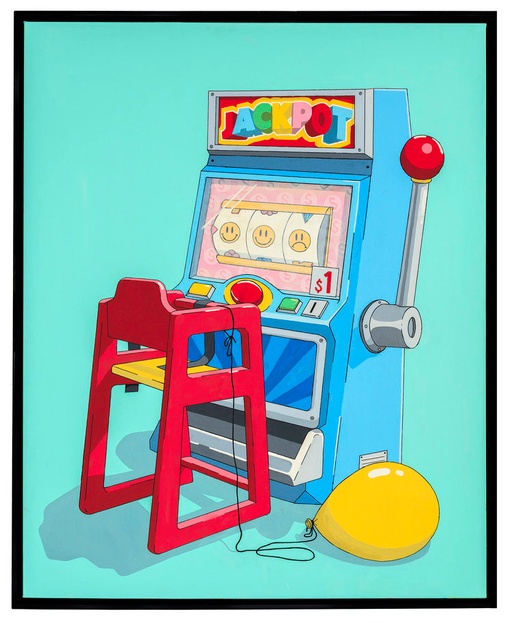
In general, the better and more hidden the message is, the more I like the artwork, because it provokes thought rather than prescribing the answer. In the example above, the artist reflects on the addiction to gambling and asks a simple metaphorical question: if you put a baby in front of a slot machine, with all the lights and movement, can you blame them for getting addicted?
Over the years, I have adapted the same pattern as a leader. I can prescribe the answer, and in most cases that would be the easiest path for the team. But giving the answer outright creates less emotional attachment, less aspiration to execute in the best possible way, and less pride in the outcome. It may contribute to my ego, but not to my organization. Today, I invest more time teaching people how to ask why than telling them what to do.